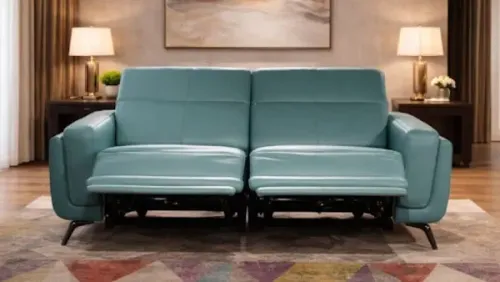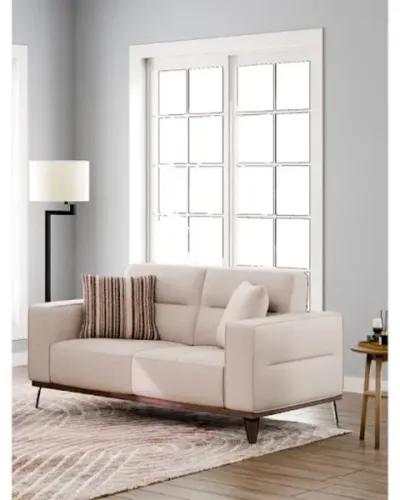
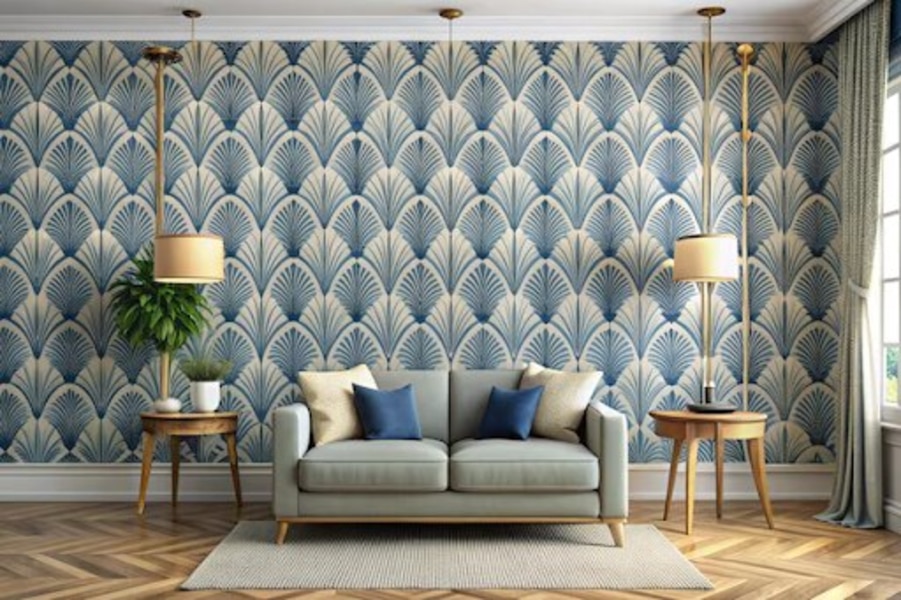
The right sofa depends on more than its appearance: room proportions, delivery access, daily use, and the way the seat supports your body all affect the choice. By measuring first and testing construction, comfort, and upholstery in person, you can create a seating plan that fits both your living room and your routine.
Key takeaways
- Measure doors, stairways, lifts, and passages before choosing a sofa.
- Choose the seating layout according to room shape and traffic flow.
- Confirm corner orientation and delivery access before placing your order.
- Test cushion support, frame stability, upholstery, and seat depth in person.
Measure the Room Before You Visit a Sofa Shop
A sofa can fit against a wall and still fail at the entrance, block a door, or leave no usable passage. Measure the room and the delivery route before visiting a sofa shop in Nashik.
1. Record the wall length, room width, ceiling height, and the exact position of doors, windows, curtains, radiators, electrical points, and the television unit. Subtract skirting-board depth and note whether a door swings into the seating area.
2. Mark the sofa’s proposed footprint on the floor with masking tape. Include the full sofa measurements, not only the advertised width: overall width, depth, height, armrest width, and chaise projection. Keep at least 750 mm for a main walking route; allow 400–450 mm between the sofa and coffee table.
3. Measure doorway clearance at its narrowest open position, then measure the lift door, lift cabin, corridor, stair width, landing height, and every sharp turn. Compare these figures with the sofa’s packaged dimensions and diagonal height. A tight route may require a split frame or knock-down connectors.
4. Check clearance behind and beside the sofa before ordering. Leave space for curtains to open, radiators to release heat, cabinet doors to operate, and cleaning access. Do not push seating hard against a damp external wall.
5. Take your measurements, a rough floor plan, and photographs to the showroom. Ask the salesperson to mark the chosen sofa footprint and walking zones on the plan, so attractive proportions do not create disruptive living room clearance.
Match the Seating Layout to the Room Shape
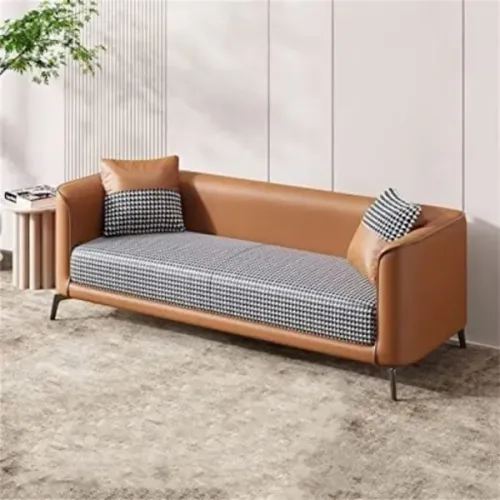
A narrow room needs a shallow three-seater sofa placed against the longest wall, leaving a clear passage of about 75–90 cm. Avoid facing sofas across the room; their depth can turn the walkway into a bottleneck.
| Option | Best room or situation | Practical arrangement |
|---|---|---|
| Three-seater sofa | Narrow room | Place against the longest wall, with a coffee table 40–45 cm in front |
| 3+2 sofa set | Square room | Face the two sofas across a central table to create balanced conversation seating |
| 2+2 corner sofa | Open-plan space | Use it to define the living zone without building a physical partition |
| Single-seater sofa | Awkward corner | Fill an isolated corner without blocking a door, window, or walkway |
| Single-seater sofa or lounge chair | Rental home | Choose movable pieces that work after a future move or layout change |
| 3+2 sofa set with extra chairs | Large family room | Create a conversation group while keeping separate circulation routes |
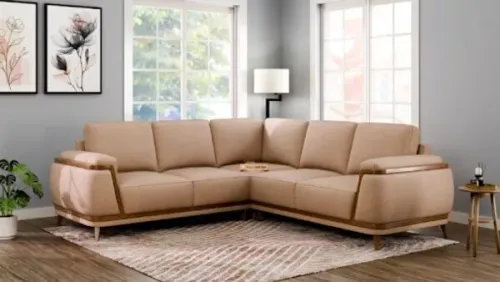
In an open-plan home, point the 2+2 corner sofa toward the television or conversation area, with its back marking the boundary between living and dining zones. Keep at least 75 cm behind it for movement.
A rental home benefits from a three-seater sofa paired with a single-seater sofa rather than a built-in corner unit. You can reposition both pieces without losing the room’s flexibility.
For an awkward corner, check the sofa’s arm width and door swing before filling the space. A narrow lounge chair often works better than forcing a corner sofa into a wedge-shaped recess.
In a large family room, leave more than one route through the seating so children and guests do not cross directly in front of the television.
Check Corner-Sofa Orientation and Delivery Access
Confirm the orientation from the room’s viewpoint, not from the person sitting on the sofa. A left-hand corner sofa has its return on your left when you face it; a right-hand corner sofa has its return on your right. Record this definition on the quotation because suppliers do not always describe orientation consistently.
- Place masking tape on the floor to mark the sofa’s full width, depth, and return. Check that the corner does not block a door, radiator, curtain, socket, television unit, or main walking route.
- Measure the clear seat width and module-junction locations, not only the overall dimensions. A corner sofa can fit the floor plan yet leave an unusable seat or place its join directly in a passage.
- Measure sofa delivery access from outside to the final room: gate, entrance, doorway, corridor, staircase, landing, lift, and sharp turns. Record clear width, height, diagonal clearance, and ceiling height at each restriction.
- Ask whether the frames separate, whether arms detach, and whether the modules use knock-down connectors. Split frames can solve a narrow stair or lift problem; a fully assembled frame may stop at the first turn.
- If you prefer flexibility, compare a reversible chaise with a fixed return. Confirm the chaise’s usable side, locking method, cushion orientation, and whether it can be changed after installation.
- Add the sofa’s packaged dimensions to the access check. Packaging, protective boards, and lift doors reduce the opening you actually have.
Request a scaled layout and a delivery route check before paying the deposit. Keep the signed orientation and access notes with the quotation.
Test the Build, Support, and Upholstery in Person
A 10-minute sit, a close inspection of the frame, and a clear upholstery specification reveal whether seating will stay comfortable and presentable under daily use. Ask what the sofa frame is made from, how its joints are reinforced, and how the suspension attaches to the front rail and arms.
Suspension type changes the feel and repair risk:
| System | What to check | Daily-use implication |
|---|---|---|
| Sinuous springs | Even spacing and secure clips | Consistent support; loose clips can create noise or sag |
| Webbing suspension | Tension, crossings, and frame staples | Comfortable support; poor attachment weakens at edges |
| Elasticized webbing | Stretch recovery and fixing points | Softer movement; over-stretching causes loss of support |
Test the shortlisted seat in the showroom:
- Sit in your normal position for 10 minutes, then check whether your hips sink below your knees or your lower back loses support.
- Shift, lean against the arms, and sit on the front edge. Movement or creaking can expose weak suspension or frame connections.
- Ask for both foam density and firmness. Density is recorded in kg/m³; firmness uses ILD or IFD. A dense foam is not automatically firm.
- Lift loose cushions and inspect their inserts, zips, and anti-slip treatment. Fixed upholstery looks tidier but makes local repair harder.
- Rub and inspect seams, piping, weave, and cushion recovery. For commercial use, request the complete upholstery assembly’s fire-test method, specimen construction, and validity—not only a fabric certificate.
Turn Your Shortlist into a Precise Sofa Specification
A quotation is incomplete if it says only “three-seater sofa” and a total price. Your custom sofa specification should identify the finished dimensions, materials, access plan, performance requirements, and replacement strategy.
1. Record overall width, depth, and height separately from clear seat width, seat depth, seat height, arm width, back height, and module-junction locations. Add a drawing showing corner orientation and the position of each joint.
2. Confirm delivery dimensions, not just room dimensions. Ask whether the frame splits, which knock-down connectors are used, and the packed size for every module through your doorway, staircase, lift, and corridor.
3. Write foam density in kg/m³ and firmness as ILD or IFD. These measure different properties: density relates more closely to durability, while firmness describes resistance under load. Do not accept “high-density comfortable foam” as a complete answer.
4. State the intended use: home, office, hotel, restaurant, or reception; expected daily cycle; user load; and applicable contract tests. For office and hospitality projects, name the required BIFMA lounge seating or public-seating standard rather than approving the sofa on domestic comfort alone.
5. Specify reversible cushions, replaceable or removable sofa covers, removable arms, accessible fasteners, fabric composition, cleaning method, and repair access. Confirm the upholstery fire test method, complete cover-foam-barrier assembly, specimen construction, and certificate validity.
Ask the manufacturer to condition timber, plywood, foam, and fabric before assembly and storage in Nashik’s seasonal humidity. Stellarfurn can use this checklist to separate design choices from assumptions before production.
Related products
 | Sofa “Upgrade your living space with Stellarfurn’s Three Seater Sofa, designed for comfort, style, and durability. View product → |
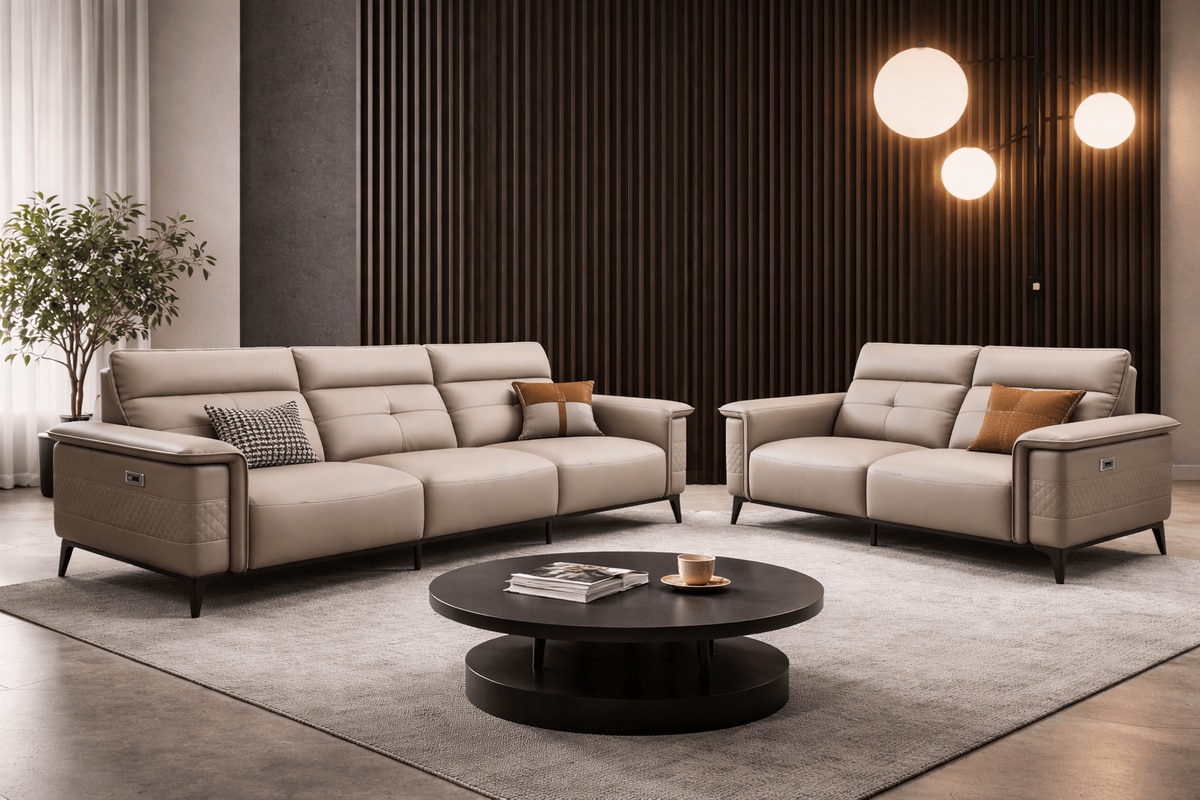 | Sofa Sofa 3+2 Luxury 3+2 Customized Sofa Set by Stellarfurn Experience the perfect balance of luxury, comfort, and durability with Stellarfurn’s premium 3+2... |
Frequently asked questions
What should you measure before visiting a sofa shop?
Measure the room, doorways, stairways, lift, corridors, and the planned sofa footprint. Record ceiling height and tight turns along the delivery route.
How do you choose a sofa layout for your room shape?
Use a straight sofa for narrow rooms, an L-shaped layout for open corners, and separate seating when you need flexible circulation.
How can you check whether a corner sofa will enter your home?
Confirm whether the corner is left- or right-facing, then compare each packed section with doorway widths, stair landings, lift dimensions, and turning space.
What should you test when inspecting a sofa in person?
Sit in your usual position and check seat depth, cushion recovery, back support, frame movement, upholstery feel, stitching, and the clearance beneath the sofa.
What details belong in a sofa specification?
Write down the overall dimensions, seat count, layout orientation, upholstery fabric, colour, cushion fill, leg finish, delivery route, and approved drawing or quote.
Related products
 | Chair Stellarfurn is a leading manufacturer of premium chairs and seating solutions, designed to combine comfort, durability, and modern style. View product → |
 | Sofa “Stellarfurn is a trusted 3+2 Seater Sofa manufacturer, offering high-quality, durable, and stylish sofa sets. View product → |
 | Sofa “Stellarfurn’s 2+2 Corner Sofa offers the perfect blend of comfort and style. View product → |
 | Chair Stellarfurn is a leading manufacturer of premium lounge chairs, designed to combine comfort, style, and durability for modern living spaces. View product → |