A made-to-measure mattress starts with the bed opening, not the size printed on an old mattress, and a few millimetres can affect fit, movement, ventilation, and safety. By the end, you will know what to measure, what to include in a quotation request, how construction is selected, and which checks should happen before delivery.
Key takeaways
- Measure the bed’s internal opening after removing the old mattress.
- Confirm thickness, edge clearance, corners, and shape before fabrication.
- Share drawings, room use, and maintenance requirements with the manufacturer.
- Approve one first article before the manufacturer cuts the full order.
Measure the bed opening, not the old mattress
The finished mattress size comes from the bed’s usable internal dimensions, not the label or measurements printed on an old mattress. Measure the opening after removing bedding and the old mattress; compression, edge wear, and a stretched cover can hide its original size.
Take measurements at several points because a frame can taper, bow, or shift out of square. Record:
- The clear mattress length from the inside of the head end to the inside of the foot end.
- The clear mattress width between the side rails, measured at the head, centre, and foot.
- The available height from the platform to the top of the side rails, including any headboard or footboard clearance.
- Both diagonals across the opening; different diagonal readings indicate that the frame is not square.
- Each corner radius, angled corner, taper, or corner cut-out.
- Any obstruction, including posts, hinges, brackets, raised panels, or rail projections.
Use the smallest usable internal dimensions when the opening varies. Then agree the mattress clearance—the planned gap between the finished mattress and the frame—with the manufacturer. Too little clearance can jam the mattress and cause edge bowing; too much lets it slide, exposes gaps, and creates an untidy or unsafe fit.
Supply a scaled drawing or clear photographs with the measurements. A made-to-measure mattress should be quoted by its finished mattress length and width, plus finished height, rather than by “king,” “queen,” or another nominal bed size.
Set thickness, clearance, and shape before construction begins
Set the finished height and outline before cutting any material: a bed mechanism, rail, panel, or curved platform can make a standard mattress unusable.
1. Record the custom mattress thickness as the usable opening height, not the thickness of the old mattress. Check headboard and footboard clearance, rail height, and whether bedding will rub or sit above the surrounding panels.
2. For a storage bed mattress, measure the closed and raised positions. The hydraulic bed clearance must allow the mattress to clear the headboard, lift arms, gas struts, and wall without binding. An extra centimetre can stop the platform locking shut.
3. Confirm how the mattress is supported. A mattress resting inside rails needs edge clearance to prevent crushing; one sitting on a panel needs a level surface and ventilation; a motorized base needs the mattress to bend at its hinge lines without catching the frame.
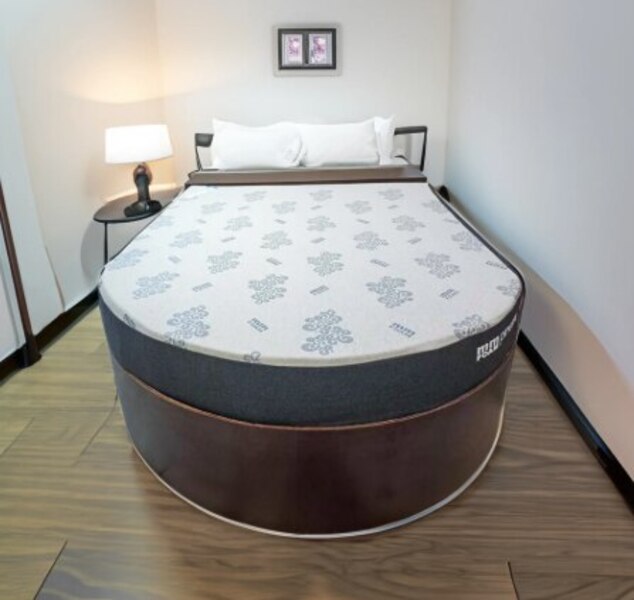
4. Draw the outline, including tapers, corner cut-outs, and radii. A rounded corners mattress needs its corner radius specified in millimetres, because a loose curve leaves gaps while a tight one buckles the cover. Note any posts, hinges, handles, or fixed obstructions.
The final specification should state length, width, finished height, shape, corner radius, and required clearances. Have the manufacturer confirm these against a drawing before construction begins; changing only the cover shape will not change the mattress’s support or prevent interference.
Give the manufacturer enough information to engineer the mattress
A custom mattress quotation becomes reliable only when it describes the sleeper and the internal build, not just the length and width. Record each sleeper’s approximate body mass, sleeping position, number of sleepers, firmness preference, heat sensitivity, and whether the mattress will be used on a fixed or motorised base.
- Send a dimensioned drawing showing the mattress plan, cross-section, corner radii, cut-outs, split location, and finished-height limit.
- Add photographs of the empty frame from above and below, the support surface, retaining rails, hinges, motors, and access route. Place a tape measure in at least one photograph.
- State the cover fabric, quilting pattern, zipper position, handles, washable-cover requirement, and edge finish.
- Ask for a written specification naming every layer, its thickness, foam density and firmness, bonding method, spring type, and finished height.
Construction choices change both support and price. Use this comparison in quote discussions:
| Option | Specify | Why it changes the engineering |
|---|---|---|
| Foam core | Density, hardness, thickness, layer order | A single overall density cannot verify support or replacement material |
| pocket springs | Spring count, gauge, coil height, comfort layers, edge support | Spring rates and perimeter reinforcement determine feel and stability |
| split mattress | Each half’s width, joining method, cover treatment, and gap tolerance | The split must clear hinges and avoid movement between halves |
| One- or two-sided build | Rotation or flipping instructions | A one-sided mattress can be damaged when flipped |
Stellarfurn can use these details to distinguish a genuinely engineered custom mattress from a standard core placed inside a different-sized cover. Ask the quotation to identify exclusions, prototype charges, and the approved tolerance for final dimensions; otherwise quilting shrinkage and edge build-up can turn an apparently correct order into a poor fit.
Related products
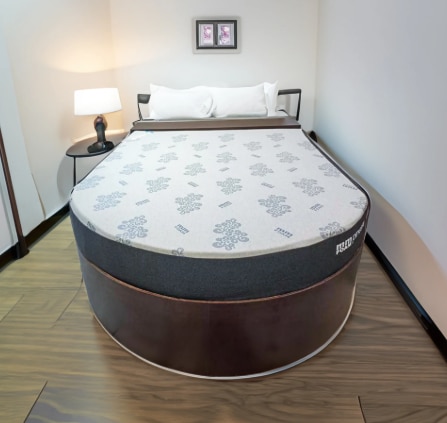 | Mattress Stellarfurn is a trusted manufacturer of custom size mattresses, designed to provide personalized comfort and support for every sleeper. View product → |
 | Mattress Stellarfurn is a trusted manufacturer of premium queen size mattresses, crafted to provide superior comfort, support, and durability. View product → |
Approve the first article before cutting the full order
Dimension approval starts production control; it does not authorise the entire order immediately. The custom mattress manufacturing process begins with a mattress prototype or first article, especially for unusual shapes, split sections, stitched borders, motorised beds, or corner cut-outs.
Approve the finished sample, because quilting shrinkage, edge build-up, and cover tension can change the final fit.
1. Compare the prototype with the approved drawing. Check finished length, width, height, corner radius, cut-outs, seam position, border alignment, cover tension, and hinge or mechanism clearance.
2. Request a dimensional inspection record. It should show measured dimensions, the agreed mattress dimensional tolerance, foam layer thicknesses, finished height, firmness, and any deviations accepted before batch cutting.
3. Confirm the construction record. For foam, record each layer’s density, hardness, thickness, and bonding method; an overall foam-density figure cannot verify support or future replacement material.
4. Test the packed unit before dispatch. For a vacuum rolled mattress, verify recovery time, final dimensions, foam rebound, seam stress, and spring deformation after compression. Some constructions should not remain compressed for long periods or be re-packed repeatedly.
Packaging is part of delivery quality, not proof of mattress quality. Keep the approved prototype, inspection sheet, photographs, and packaging-test result with the order so replacements can be matched to the accepted specification.
Match the finished mattress to the room and its maintenance plan
A mattress can be dimensionally correct and still fail in service if the room traps moisture or the cleaning plan damages its cover. Check the base, room climate, access route, and maintenance method before installation; a breathable mattress Nashik buyers select must suit the actual bed platform and operating conditions.
1. Confirm mattress ventilation at the base. Record slat spacing, solid-panel areas, room humidity, and whether staff can lift or rotate the mattress. A solid, poorly ventilated base can retain moisture underneath, causing odour or mould even when the top feels dry.
2. Specify the cover precisely. A washable mattress cover must state whether it is machine-washable, whether shrinkage was tested, and whether removing it exposes bonded layers or changes finished dimensions. A removable protector is not the same feature.
3. Write the turning instruction into the order. Rotate a one-sided mattress; do not flip it. Flip a two-sided mattress only when its construction supports loading on both faces.
4. Test access through doors, corridors, stairwells, lifts, and service entrances. Confirm that the finished mattress can reach the room without bending, scraping walls, or blocking emergency routes.
5. For a hotel, serviced apartment, or office, attach a hospitality mattress specification covering batch identification, replacement-cover availability, approved cleaning chemicals, fire-performance requirements, and an inspection or replacement schedule. A domestic warranty does not replace these controls.
Frequently asked questions
Why should you measure the bed opening instead of the old mattress?
The opening gives the usable finished dimensions. Compression, edge wear, and a stretched cover can make an old mattress measure inaccurately.
What details must you confirm before mattress construction begins?
Confirm thickness, clearance on each side, corner shape, and any unusual angles or cut-outs before fabrication starts.
What information should you give a customized mattress manufacturer?
Provide the bed opening dimensions, a drawing or template, intended use, user requirements, delivery constraints, and maintenance expectations.
Why approve a first article before placing the full order?
A first article lets you check fit, thickness, shape, edge finish, and comfort before the manufacturer produces the remaining mattresses.
Related products
 | Mattress Stellarfurn is a trusted manufacturer of premium single mattresses, designed to provide comfort, support, and long-lasting durability. View product → |
 | Mattress Experience everyday comfort with Stellarfurn Foam Mattresses—crafted to deliver the perfect balance of softness and support. View product → |
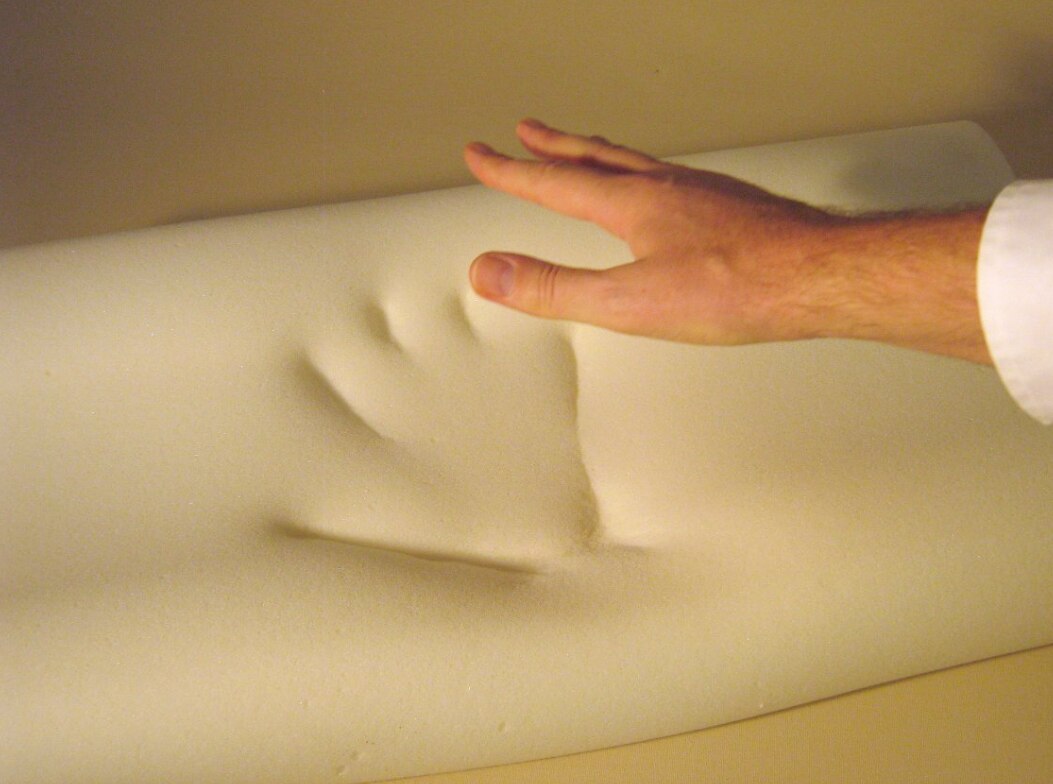 | Mattress Enjoy personalized comfort with Stellarfurn Memory Foam Mattresses—designed to adapt perfectly to your body for a truly restful sleep. View product → |
 | Mattress Stellarfurn is a leading manufacturer of high-quality double mattresses, designed to provide exceptional comfort, support, and durability. View product → |
Keywords